
AI adoption stalls on people, not technology.
Artificial Intelligence didn't create this problem. It exposed it. The tools are ready.
Your people are the ones being asked to change, and that is exactly where rollouts stall.
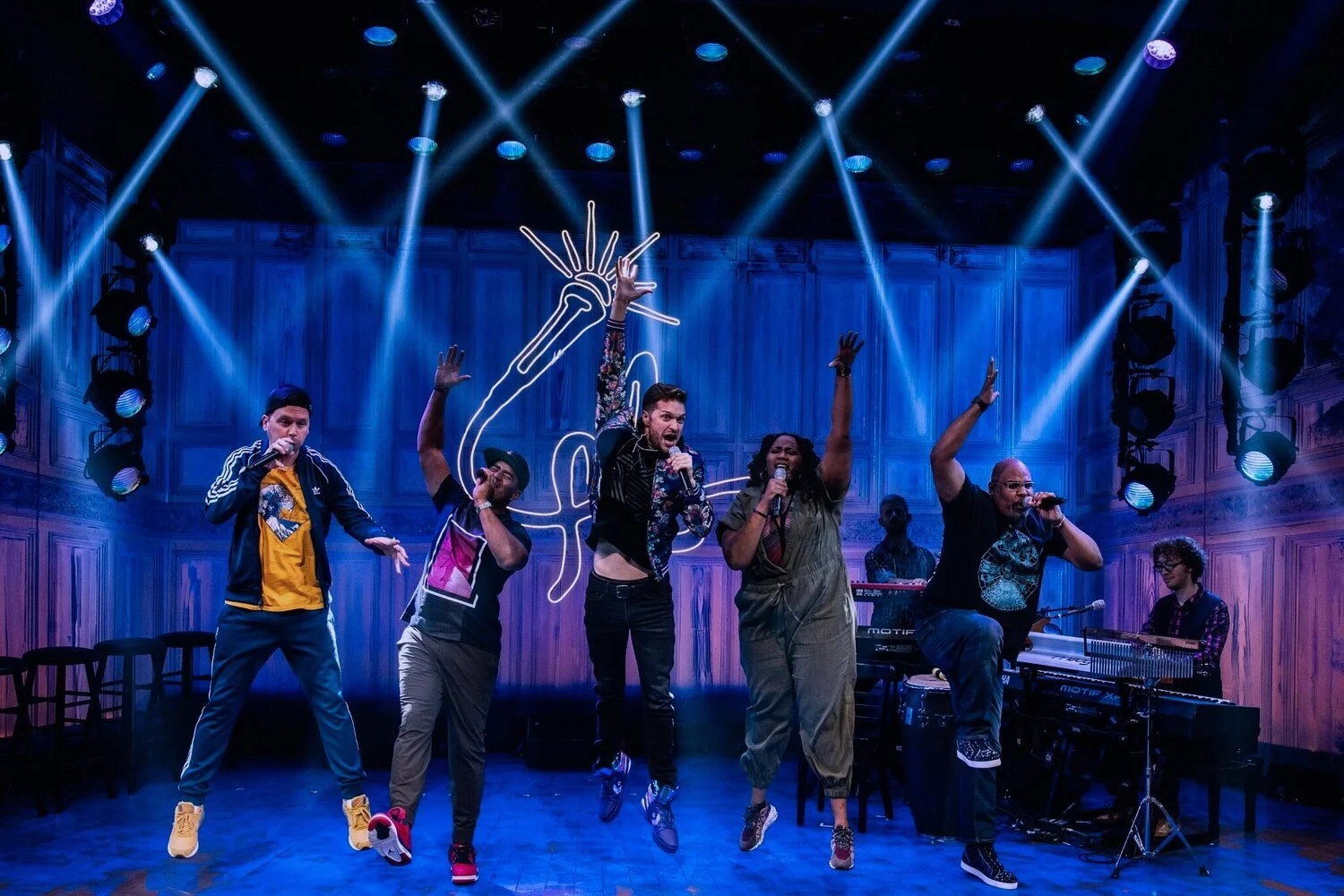
IMPROV YOUR MINDSET
Freestyle+ was built by the team behind Freestyle Love Supreme, the Special Tony Award-winning, Grammy-nominated Broadway production. Co-founder and CEO Anthony Veneziale has spent two decades making improvisation repeatable under pressure. The method is grounded in Dr. Charles Limb's fMRI research at UCSF on what the brain does during improvisation.
The rollout launched.
Then it flatlined.
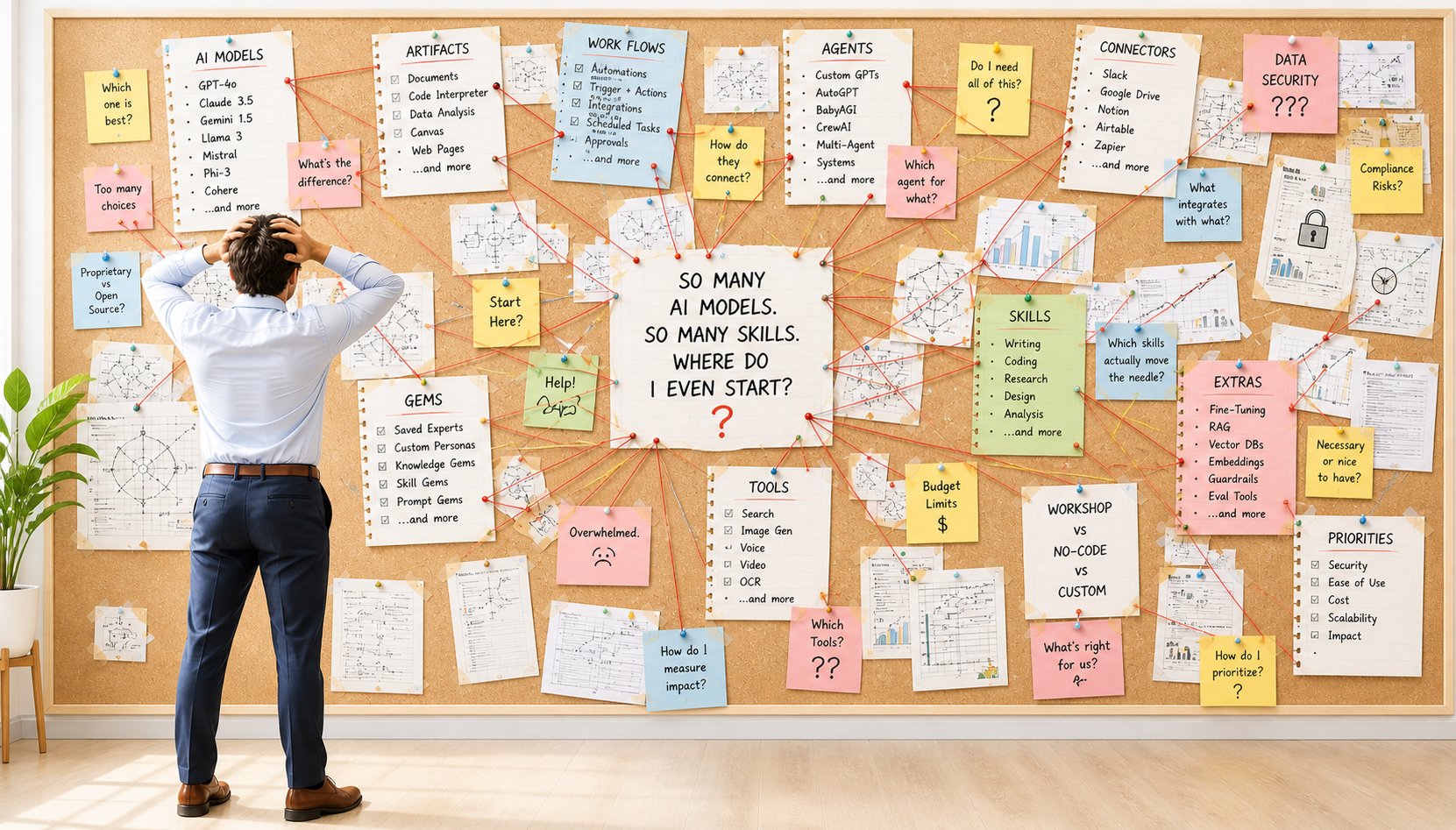
Freezing is a reflex, not a flaw. Reflexes can be re-trained.
Licenses were bought. Half of them sit unused by month two.
The kickoff was full of energy. By Thursday, everyone s back to the old way.
People nod through the enablement session, then quietly avoid the tool.
Leadership asks why adoption is flat. No one wants to say it out loud.
Your team isn't failing.
It's freezing.
As AI generates the answers.
People generate the TRUST.

A rollout depends on capabilities AI can't hand you:
reading the room
building on a half-formed idea
staying open when the plan shifts
The comparative advantage of your people is becoming relational.
We build workshops around hands-on practice, not lectures.

Participants build the four BOLD* habits through structured improv exercises. They get in low-stakes reps that build the reflex before it's tested. Then we bridge straight into real-world application. Participants take what they just practiced and run it against their actual work.
We start by listening to you. We discover your objectives and build the workshop with you — not a template pulled off a shelf. Then we deliver the results you need to instill optimism about the future of AI at work.
Read the freestyle+ workshop reviews, including one on AI adoption.
The four BOLD habits are Bravery, Optimism, Listening, and Discovery. Practiced together under pressure, they become Resilient Action.
People Sometimes Ask:
Why do AI rollouts stall after launch?
1
Most AI rollouts stall because the hard part was never the technology. The tools work. The people being asked to change how they work are the ones who freeze, so licenses sit unused by month two and teams drift back to the old way by the second week. Decades of change management research land in the same place: change fails at the behavior level, not the strategy level. An AI rollout is a behavior-change problem wearing a software badge, and it stalls anywhere AI adoption readiness was never built.
Why do employees resist using new AI tools?
2
Resistance to new AI tools is rarely about the tool. It is a freeze response to uncertainty. Using AI in front of your peers means learning in public, showing a half-formed prompt, and risking a wrong answer where everyone can see it. That is interpersonal risk, and when a team has no psychological safety for it, people quietly retreat to the method they already trust. The resistance is biological, not personal, which is also why it answers to practice rather than pressure.
How do you train a team for AI adoption?
3
You train the behavior, not just the tool. Effective AI adoption training gives people repeated, low-stakes practice in the human skills that break first under uncertainty: speaking up, building on a half-formed idea, and staying open when the plan shifts. freestyle+ does this through applied improv, building the four BOLD habits, Bravery, Optimism, Listening, and Discovery, so a team rehearses the response before it gets tested for real. Practiced together under pressure, those habits become Resilient Action, and then the work bridges straight into real tasks so the reps carry over.
What makes improv-based training work for AI adoption?
4
Improv rehearses the exact behaviors an AI rollout demands: responding without a script, building on an imperfect output instead of judging it, and staying present when the plan changes mid-task. There is neuroscience under it. Dr. Charles Limb's fMRI research at UCSF found that improvisation quiets the brain region tied to self-monitoring and self-censorship, the same reflex that makes people freeze in front of a new tool. freestyle+ was built by the team behind Freestyle Love Supreme, the Tony Award-winning, Grammy-nominated Broadway production, and led creatively by co-founder Anthony Veneziale. The method is not "games rewire your brain." It is that rehearsal builds the muscle: practice lowers self-judgment and raises tolerance for uncertainty, which is what daily AI use actually asks of people.