
Why AI Tool Rollouts Fail (and What Helps)
AI tool rollouts usually fail because people quietly stop trying, not because the software stops working. The licenses get bought, the kickoff happens, and a few weeks later the same handful of enthusiasts are doing all the experimenting while everyone else drifts back to the old way. This post is for L&D leads, HR partners, and team leaders who own a rollout that has gone quiet and want to know what to do about the people side, which is the work behind freestyle+ AI adoption training.
Why do AI tool rollouts fail?
AI tool rollouts fail when using the tool asks people to do something they have never practiced: try it, get a mediocre result in front of colleagues, and keep going anyway. Training usually covers where the buttons are and how to write a decent prompt. It rarely covers how to feel capable while you are visibly not yet good at something.
That gap is behavioral. Most people already know they are supposed to use the tool. What they lack is a low-stakes place to be bad at it. For a busy person with no such place, waiting is the sensible move.
What does a stalled rollout look like from the inside?
Nobody refuses. People nod during the kickoff and then go quiet. A few patterns show up again and again:
Worry about the job arrives disguised as a quality concern. "Will this replace me" rarely gets said out loud, but "I'm not sure it's accurate enough for what I do" gets said a lot.
People try the tool once, get a flat answer, and decide it does not work. They judge the first output instead of building on it.
Nobody shares what they tried, because showing a rough attempt feels like admitting you are behind.
Managers wait for someone on the team to go first, and the team waits for the manager.
freestyle+ describes adoption as a path from fear to trust to fluency to co-creation. Most stalled rollouts sit between the first two. In our model, the second stage sounds like "Maybe I should at least try it, but I don't want to mess up." That sentence is the stall.
Is this a training problem or a behavior problem?
Behavior. A tool class can teach a feature in an hour. It cannot change how comfortable a person feels trying something new in front of peers. Change management frameworks point the same direction: Prosci's ADKAR model, for one, treats change as something each individual has to go through, not something an announcement completes.
Improvisers face this exact problem every night. They act without a script, with an audience watching, knowing some of it will not land. The skills that make that workable are specific: listen to what a partner offers, build on it, and recover fast when it goes sideways. All of them transfer to working with AI, where an output is an offer to build on rather than a verdict to accept or reject.
What helps a stalled team start using the tool?
Reps. Low-stakes, repeated, done with other people, and close enough to real work that the lesson sticks. A freestyle+ workshop on this topic does not teach prompting and does not recommend one model over another. It gives a team practice at the behaviors the tools demand.
freestyle+ organizes that practice around four behaviors called the BOLD Mindset: Bravery, Optimism, Listening, and Discovery. With AI, bravery is sending the first prompt where colleagues can see it. Optimism is saying what the tool might make possible before listing what might break. Listening is reading the output as an offer. Discovery is trying again with a changed question. Resilient Action is those four working together under pressure, such as a deadline and an unfamiliar tool at the same time.
Here is what the practice looks like in a room.
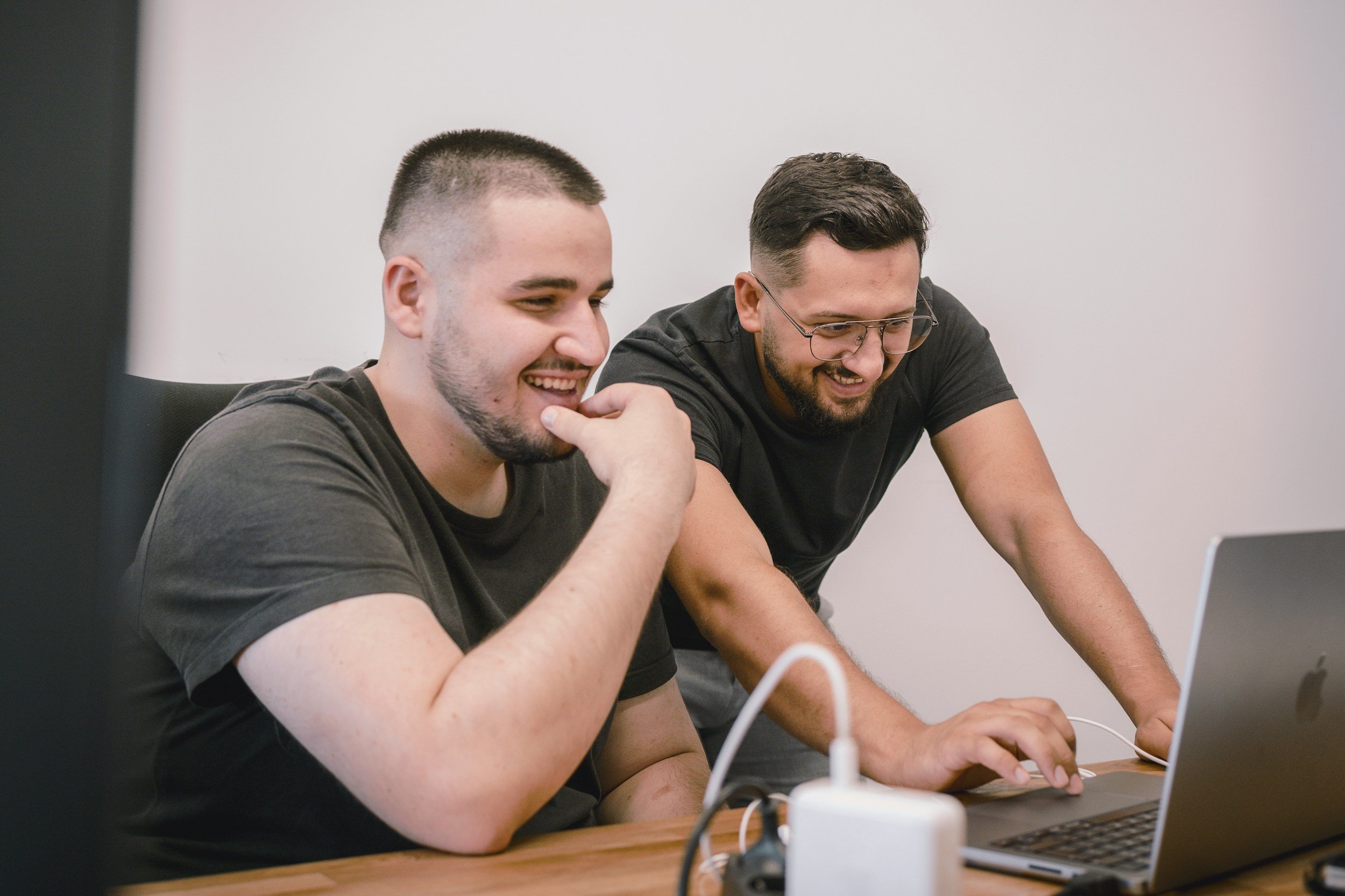
"Yes, and" versus "yes, but"
Two people plan something together. In round one, every reply starts with "yes, but." In round two, every reply starts with "yes, and." The first round goes nowhere fast, and teams usually laugh at how quickly. The debrief is the point: how often does the first response to a new tool, or to a colleague's idea, start with "yes, but"? People see their own default skepticism before it shows up in a real conversation about AI.
Confidence without a script
One person is introduced as an authority on a subject they have never studied and answers questions as they come. Nobody is graded. The group practices responding without having the answer ready, and the debrief connects it to a belief many people hold about AI: that you must be an expert before you are allowed to use it.
Connecting two unrelated things with AI in the loop
In Vennspiration, one person shares a work project and something they love doing outside work, then asks an AI tool how the two are alike. The answer tends to be decent and slightly off, which is useful. People practice treating the output as an offer, adding to it, and correcting it, in a setting where nothing is at stake.
Bringing it back to work
Each session ends with a plain question: where in your real week do you hesitate to start? A report, a customer email, a planning doc. Each person picks one small experiment to run before the next team meeting.
Why does play help?
Dr. Charles Limb, a UCSF neuroscientist and the freestyle+ scientific advisor, ran an fMRI study of jazz improvisation with professional jazz pianists. When the pianists improvised, activity dropped in a brain region tied to self-monitoring. Pianists are not office teams, and the study did not measure AI adoption. It does help explain why low-stakes play makes it easier to try things: less of the internal editor is running while you do.
What does not help?
Mandates and usage leaderboards raise login counts. They do not make anyone feel safer trying something badly. A second round of feature training teaches the same buttons to people who were never stuck on buttons.
Who is this for, and who is it not for?
This approach fits teams where the tool is bought, the policy is clear, and people still hold back. It does not fit a rollout where the tool is broken, the data rules are undecided, or leadership has not said what AI is for. Fix those first. Practice cannot cover for them.
If your rollout has gone quiet, start with a free 15-minute call. We will ask what the room looks like now and tell you whether practice is the right fix. You can also read what teams say on the workshop reviews page.
