
A freestyle+ corporate improv workshop is a guided session where a team plays short improv games, then talks about what each game showed about how they work together. It usually runs 60 to 90 minutes. This guide covers what happens in the room, what changes the price, and who should skip it, so an L&D or HR lead can decide whether corporate improv workshops are worth trying with their team.
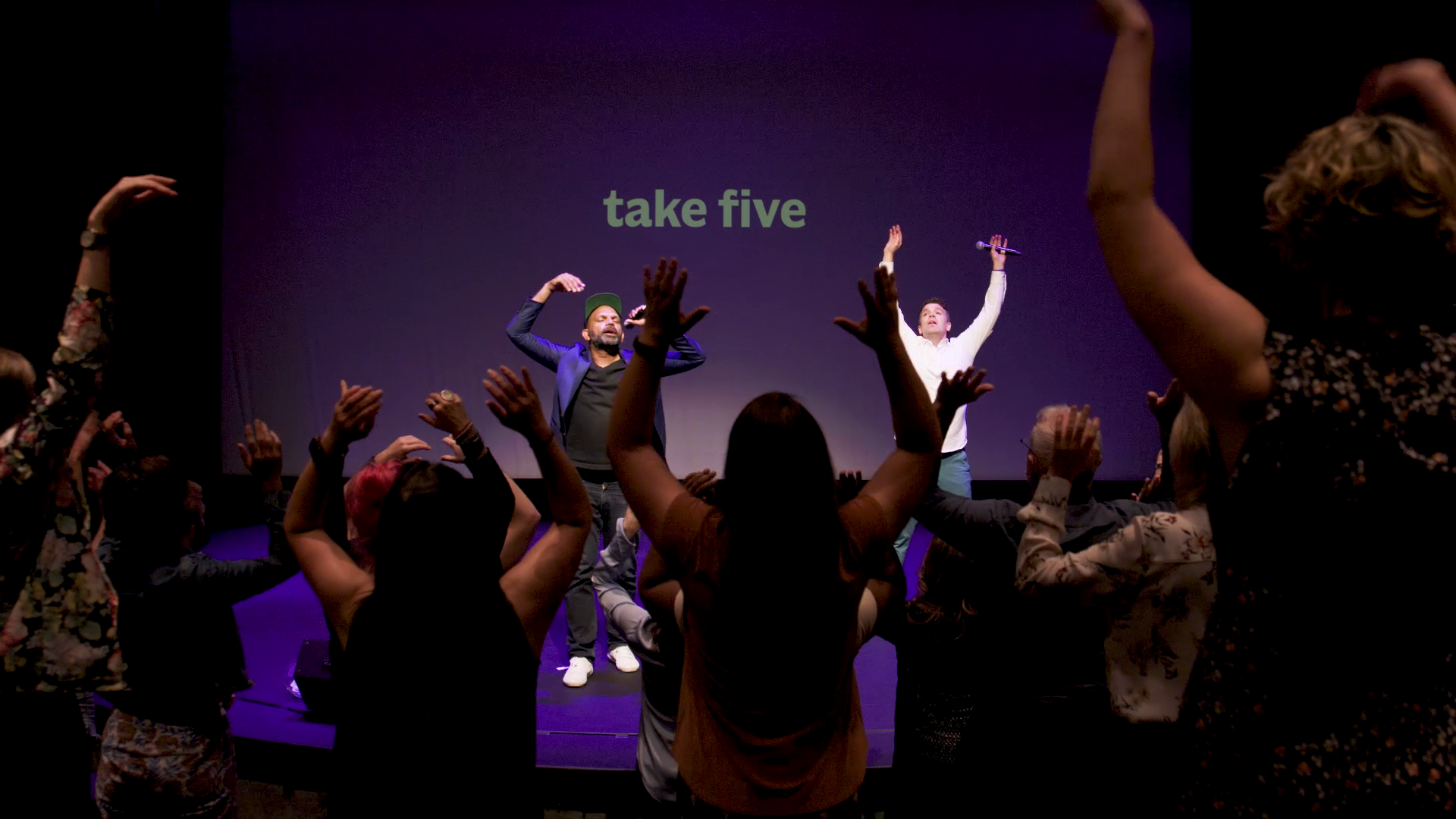
What does a freestyle+ corporate improv workshop look like from start to finish?
A typical 60-minute virtual workshop has five parts, and an in-person session follows the same shape with more time in the middle.
About 3 minutes: introductions and who is leading the room
About 7 minutes: agreements and a warm-up
About 4 minutes: a short explanation of the science behind the games
About 40 minutes: two or three exercises, each followed by a debrief (the debrief is very important)
About 6 minutes: a closing wrap up that ties the hour back to work
People remember the games. The debriefs are where a team says how the games made them feel, think, and how they may apply to their everyday challenges. Games are a form of low risk exposure therapy to managing the mindset required to get through difficult decisions, overcome creativity blocks, and work together as a team by active listening and contributing in a brave manner.
What happens in the first ten minutes?
The first ten minutes set the rules and loosen up the room. The session opens with a handful of agreements: surprise yourself, make everyone look and feel great, listen with curiosity, and take care of yourself. Those agreements, along with a warm-up, are also how a team starts to build psychological safety with small risks.
Then comes a warm-up that is physical, vocal, or mental. One is called Shake Out. Everyone simply shakes out one arm while counting to eight out loud, then the other arm, then each leg. The round repeats counting to four, then two, then one, and ends with everyone landing in a superhero pose of their own choosing. It works seated too.
The silliness is on purpose. In a 2008 fMRI study, Charles Limb and Allen Braun scanned six professional jazz pianists while they played memorized music and while they improvised. During improvisation, activity dropped in a region linked to conscious self-monitoring and rose in a region linked to self-directed behavior. Six musicians is a small group, and the authors call their reading of the pattern a hypothesis. The study does not prove a warm-up changes a meeting. It does give a reason to start with low-stakes play before anyone is asked to talk about real work.
What are the exercises like?
Most workshops use two or three exercises, chosen to match what the team needs to practice. Freestyle+ draws on a large library of games. Here are two of them.
Remember When
One person starts a story with "Remember when we went to..." and finishes the sentence with whatever comes to mind. The next person adds a sentence that starts with "Yes, and," and the group keeps building until someone calls the story finished. Then a new story begins. The skill being practiced is listening closely enough to build on what was just said instead of waiting to say your own thing.
The debrief asks how building on each other's ideas changed the group, and where quieter voices could get more space.
Memory Lanes
In small groups of four or five, one person gets a word and tells a true story from their own life in two minutes or less. When the story ends, that person offers a word to the next storyteller. Everyone else listens without interrupting. The practice is listening without preparing a reply, and noticing where teammates' stories overlap and where they differ.
Neither game asks anyone to be funny (but people do have fun).
What makes a workshop more than just a fun hour?
A workshop earns its place when the team connects each game to something real. Every exercise ends with questions that move from the game to the workday. The closing debrief uses three prompts: I love, I wish, what if. Teams often leave with a game or two to play at the start of their own meetings.
One session will not change how a team works. Repetition does, which is why some teams book a series or keep playing a game at their weekly meeting. We are building a mindset.
Who is a corporate improv workshop for, and who is it not for?
A corporate improv workshop fits teams that need to practice something human while conditions are changing: a new tool, a reorg, a new leader, or two groups that rarely talk. It also suits teams that mostly meet on video, where connection takes deliberate effort. If you want to hear from teams who have done it, the workshop reviews are public.
It does not fit every situation. Skip it if you want a comedy show, which is a live performance and a different format. Skip it if you need a certification or a compliance sign-off. Hold off if the team is in a conflict that needs a mediator first, or just got hard news and has no room to talk about it, because play lands badly when nobody has named what is going on. A mandatory session with no explanation of why it is happening tends to go the same way.
What changes the price of a corporate improv workshop?
The price depends mostly on group size and whether you meet in person or online, plus the kind of session you pick: a workshop, an interactive keynote, or both. A real number comes on the first call, because the design depends on what your team needs to practice. For maximum impact, all of our services can combine during a team offsite or a regular program through the course of a quarter year.
What should you ask any improv workshop provider?
Ask these before you book, whoever you hire.
Who will be in the room, and what is their experience improvising and leading sessions for work teams?
Can you walk me through the agenda minute by minute?
How do the debriefs connect to my team's real work?
What happens for people who do not want to perform in front of colleagues?
What does my team take away to keep practicing after the session?
Our sessions are led by working performers who also run workshops, and we are glad to answer all five on a first call.
How do you start?
Start with a free 15-minute call. Tell us what you want your team to be able to do differently, and we will say whether practice fits or something else would serve you better.
