
When skilled jazz pianists and freestyle rappers improvise inside an fMRI scanner, activity drops in brain areas tied to self-monitoring and rises in part of the medial prefrontal cortex.
That’s the pattern reported in a 2008 study of pianists and a 2012 study of rappers. Later work has made the picture messier, and none of the studies below tested a workshop. Here’s what each study did, where it stops, and what a manager or L&D lead can reasonably take from it.
We teach applied improv at freestyle+, including AI adoption training, so we have a stake in how this research gets described. We’ve given the limits as much room as the findings.
What did the first improvisation brain scans show?
They showed that professional jazz pianists used their brains differently when they made up music than when they played something memorized. In 2008, Dr. Charles Limb and Allen Braun published an fMRI study of six professional jazz pianists in PLoS ONE. Limb is a UCSF neuroscientist and the freestyle+ scientific advisor. Each pianist lay in a scanner with a small MIDI keyboard and did two pairs of tasks. In one pair, they played a C major scale, then improvised melodies using only those notes. In the other, they played a blues melody they had memorized, then improvised over its chord changes.
When the pianists improvised, activity dropped in the dorsolateral prefrontal cortex, a region linked to planning and self-monitoring. It rose in a small spot at the front of the medial prefrontal cortex. Movement and hearing areas got busier, and parts of the limbic system, including the amygdala and hippocampus, got quieter. The researchers also counted the notes played. The number and spread of notes didn’t differ significantly between conditions, so playing more notes doesn’t explain the extra motor activity.
The authors were careful about what it meant. They said a causal link between the prefrontal changes and the rest of the pattern was only “tempting to speculate” about.
Did freestyle rappers show the same pattern?
The prefrontal part matched. In 2012, Siyuan Liu, Allen Braun, and colleagues at the National Institutes of Health scanned 12 freestyle rappers, each with at least five years of experience. Every rapper did two tasks over the same 8-bar beat: freestyling, and performing a set of rehearsed lyrics. Compared with the rehearsed version, freestyling showed lower activity in the dorsolateral prefrontal cortex and higher activity in the medial prefrontal cortex, which NIH describes as responsible for motivation of thought and action. The scans also pointed to a network linking motivation, language, mood, and movement.
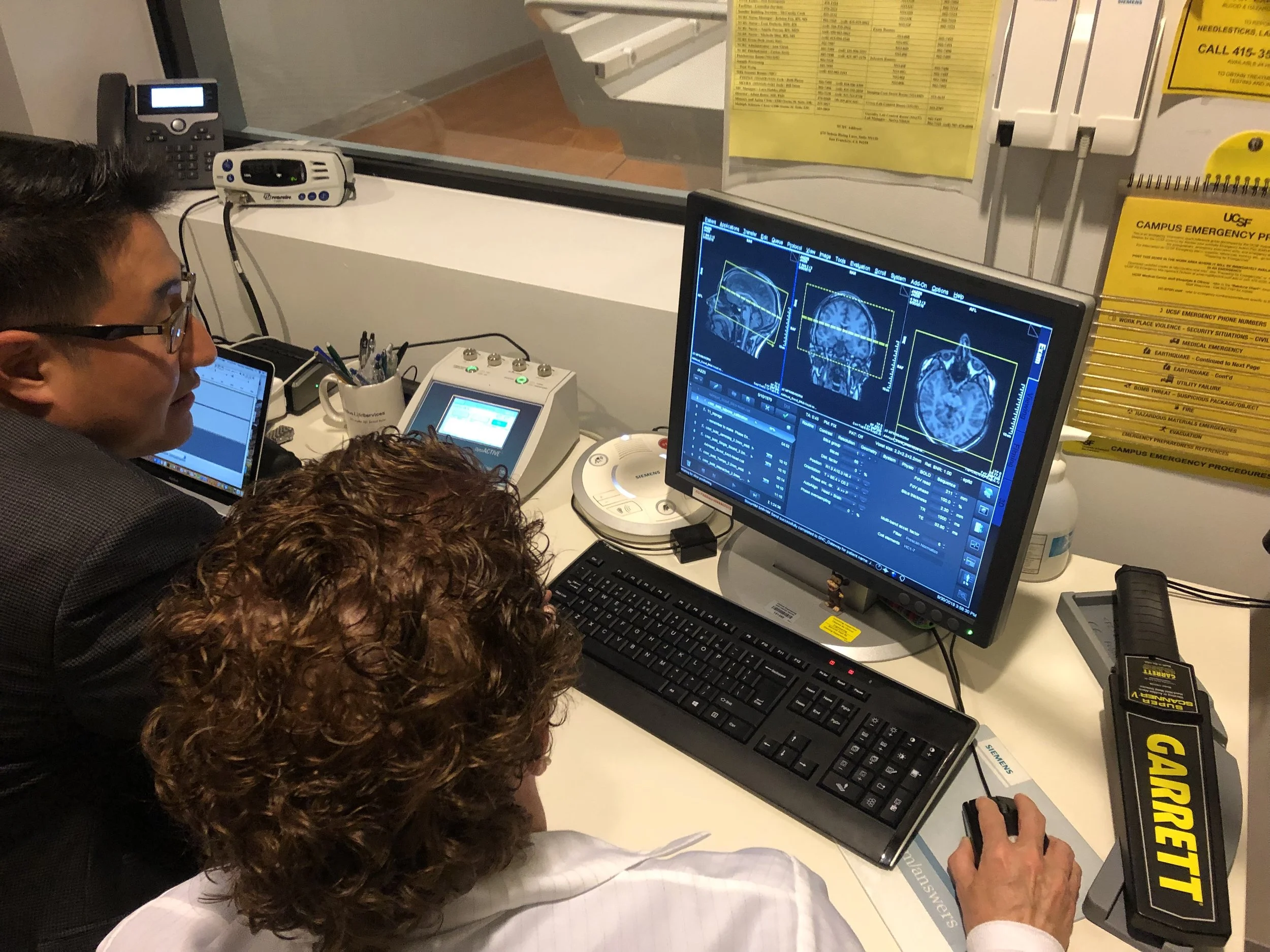
Dr. Limb monitors the brain of our own Chris “Shockwave” Sullivan in real time while he beatboxes in an fMRI machine.
The limbic findings were less tidy. In the pianists, amygdala activity dropped. In the rappers, the amygdala was part of a network connected to the medial prefrontal cortex.
Does improvising switch off the inner critic?
Only partly, and the researchers say so. Braun told Nature News in 2012 that reading the prefrontal drop as relaxed executive control is “a little bit controversial in the literature,” since other studies have found dorsolateral prefrontal activity during creative behavior.
A 2025 study in the Annals of the New York Academy of Sciences tracked 16 skilled jazz pianists as they played one standard three ways: from memory, improvising around the melody, and improvising freely over the chord changes. In both improvising conditions, a brain state combining hearing, movement, and part of the insula became more likely, and what showed up depended on how free the playing was. Nothing in that design looks like a single switch.
Another study, published in 2014 by Donnay and colleagues, scanned 11 professional jazz pianists as they traded four-bar phrases with another musician, a practice jazz players call trading fours. Compared with memorized exchanges, improvised ones produced strong activity in Broca’s and Wernicke’s areas, regions best known for language, which the authors tie to musical syntax. They also state that the experiment was not designed to separate listening from responding.
What do these studies not show?
Before anyone puts a brain scan on a slide, keep four limits in mind.
Everyone scanned was a trained professional, and everyone was a man. The 2008 authors say it remains to be clarified whether the findings apply to less skilled performers, and the 2025 authors say an all-male group may limit how far their findings generalize.
The samples were small: six, 11, 12, and 16 people.
fMRI follows changes in blood oxygen as a stand-in for neural activity, and the setup is odd: the pianists played a small keyboard while lying in a scanner.
None of the four studies tested a workplace outcome. Nobody was scanned before and after a workshop, and nobody measured how a team met or made decisions afterward. The 2008 and 2012 designs also compared improvising with performing something memorized, which is a different question from whether practicing improv changes how people behave at work.
What can a team take from this?
What a team can use is the design logic. It’s narrower than a brain-scan headline makes it sound.
The pianists and rappers were professionals working inside a frame: a blues progression in one study, an 8-bar beat in another. A freestyle+ workshop uses a frame too. Agreements come first (surprise yourself, make everyone look and feel great, listen with curiosity, take care of yourself, serve the moment), and the exercises that follow are short and low-stakes, so people get reps at responding without a script.
A single session doesn’t hand anyone a professional pianist’s years of practice, and we don’t claim it does. It can give a team some practice in a room where the first move isn’t judged, then send each person off to try one small thing afterward. The case for small, repeated risks is in our post on building psychological safety with small risks.
The trading-fours study adds a second point. The pianists were responding to another musician in real time. It didn’t isolate listening, so we aren’t claiming it shows anything about listening. Still, the setup resembles “yes, and”: you can only build on what your partner just offered if you took it in. That’s why our sessions practice low judgment and close listening together.
What is one way to try this on Monday?
Open your next team meeting with a two-minute building round. One person offers a rough idea for the week in a single sentence. Each person after that starts with “yes, and” and builds on what came before. Nobody evaluates until everyone has built. Then ask one question: what felt different about that from a normal round of feedback? If you run the meeting, go first with a small, slightly rough idea, so nobody feels they need to match something polished.
Who is this post not for?
Anyone who needs an effect size from a workshop to take to a board. None of the studies above supplies one, and this post won’t invent one.
How do you start with your own team?
If you want to see what this practice looks like with your team, start a conversation with us. The first call runs 15 to 30 minutes and covers the outcome you are after and what your team is facing.
